
AgriSmart’s task management tools make it easy to assign, track, and complete work across your farm. From seasonal harvests to daily maintenance, you can monitor progress in real time, allocate responsibilities to the right team members, and ensure nothing is missed. Keep your workflow organised, your team aligned, and every task visible in one central dashboard.
Piece Rates Without the Payroll Risk
Bins, rows, and kilograms recorded in the field, with every pieceworker’s earnings checked against the Award’s hourly floor before pay day.
AgriSmart records piece units and hours on the same entry at the point of pick, then works out each worker’s effective hourly rate shift by shift. Where earnings fall under the minimum wage guarantee, the exact top-up is flagged while the pay week is still open, so it’s a small correction now, not a Fair Work back-pay case later.


Overtime & Penalties

Classification Control

Public
Holidays

Piece Rate Reconciliation

Audit-Ready Records
Control Piece Rate Compliance
Before Payroll Runs
Reduce Underpayment Risk
Multi Site Visibility
Manage Seasonal Teams
Ensure Award Accuracy

THE REAL EXPOSURE
Payroll Doesn’t Create the Problem
It Just Makes It Official
Most growers assume underpayment risk lives inside payroll. It doesn’t. It lives in the gap between the field and the pay run, and that gap is where AgriSmart works.
The Field
Workers pick by the bin. Supervisors record output. Hours are tracked separately. Rates may differ between blocks.
⚠ The Gap
No validation.
No comparison.
No visibility.
tap to see the fix →
AgriSmart Closes It
✓ Validated at source.
✓ Award minimum compared daily.
✓ Full visibility, every shift.
Payroll
Processes exactly what it receives. If earnings weren't checked against the Award minimum before arriving here, payroll cannot fix the exposure.
Control Piece Rates Before Payroll
The Rule You’re Being Measured Against
Two separate Award rules apply to piece rates. The rate must be set so a competent worker earns 15% above the minimum hourly rate. And every day, each worker must clear a minimum wage guarantee.
Read More
The first rule is about how you set the rate. Under the Horticulture Award, the piece rate must be set so that a worker at the average productivity of a competent pieceworker, meaning someone with at least 76 hours of experience at the task, earns at least 15% above the minimum hourly rate for their classification. For casuals, that hourly rate already includes the 25% loading.
The second rule applies every day. Regardless of output, each day a worker must be paid no less than their Award hourly rate for the hours they worked that day. This daily guarantee is at the plain hourly rate, and days cannot be offset against each other, so a strong day cannot cover a short one.
Most growers know these rules exist. Very few have a system that checks the daily guarantee systematically. AgriSmart does.
Output and Hours Captured Together
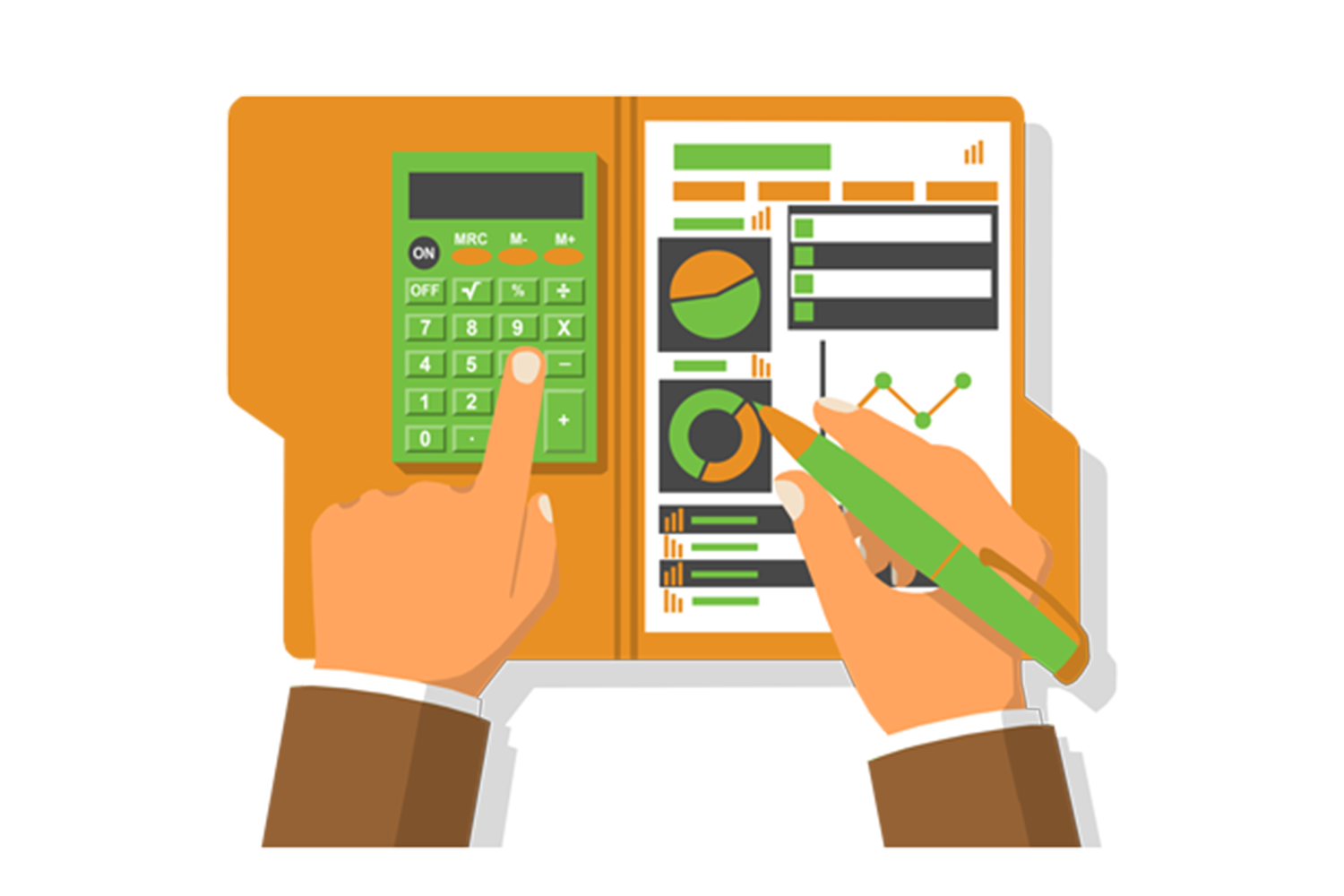
The check only works if you have both sides of it. AgriSmart records piece output and hours worked on the same entry, at the point of work, not reconstructed later from separate systems.
Read More
Supervisors record what each worker picked and how long they worked, by block, by activity, per shift. When workers move between activities during the day, each period is logged separately with the correct rate. Nothing is consolidated at the end of the week from two different spreadsheets.
This is what makes the compliance check meaningful. Piece rate data without hours is just a production record. Together, they become a compliance record.
The data AgriSmart collects is the same data the FWO would ask for. You’re building your audit evidence at the source, not scrambling to reconstruct it.
Compliance, Sorted In The Background
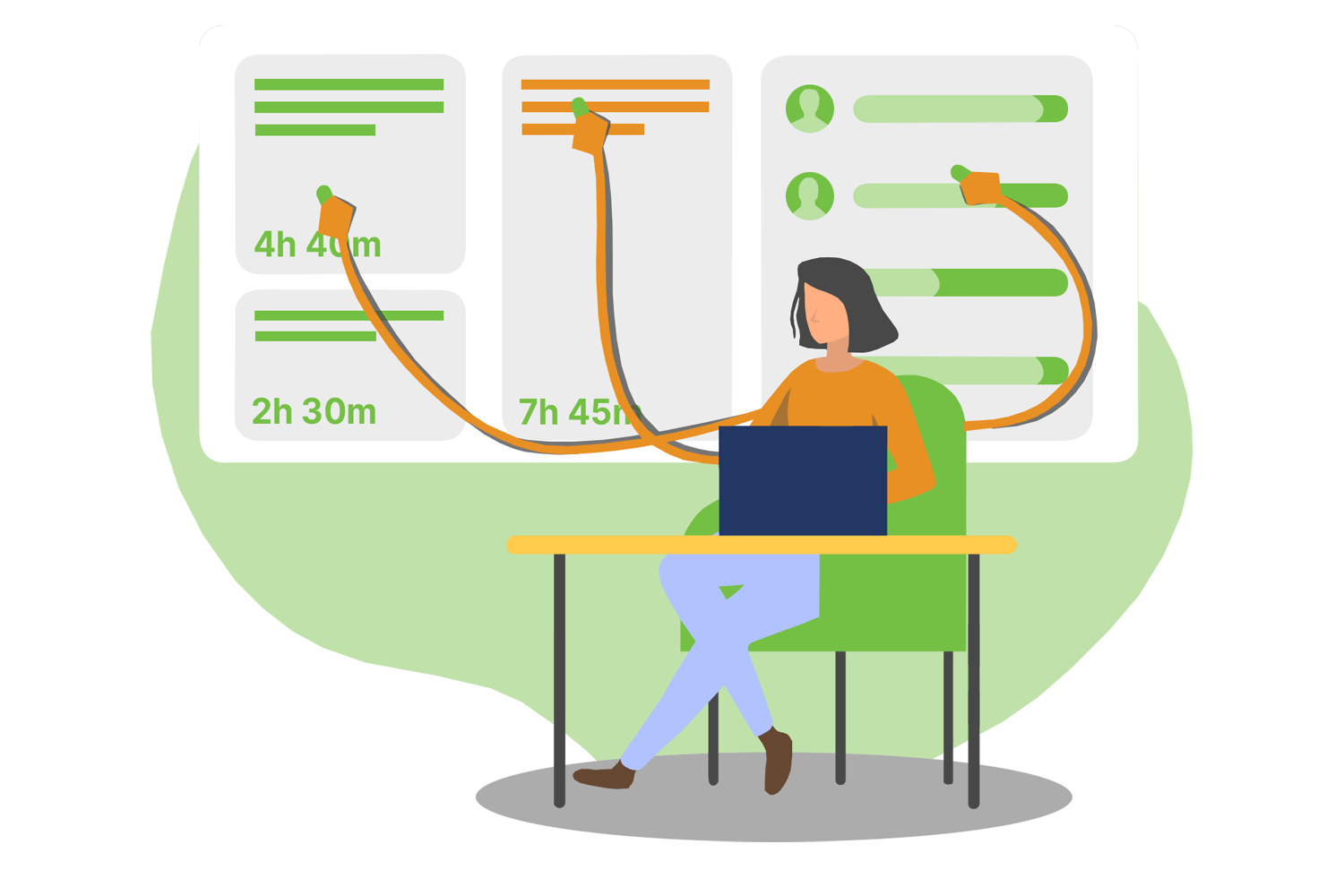
Once a shift is completed, AgriSmart reconciles each worker’s earnings against the daily minimum wage guarantee. No one has to ask it to. No one has to know how to do the calculation.
Read More
The Award minimum hourly rate is maintained in AgriSmart and updated when it changes. For each day, the system compares what the worker earned against their hourly rate multiplied by the hours they worked, and flags any day that falls short. Because the guarantee cannot be offset across days, each day is checked on its own.
This happens for every worker, every day, every week, including during peak season when crew sizes double and manual checking becomes impossible.
AgriSmart also holds the piece rates you set, so you can keep them aligned to the 15% rate-setting standard as classification rates change.
The difference between a grower who knows their compliance status and one who doesn’t isn’t intent. It’s whether this check is running.

Shortfalls Resolved Before Payroll
When a shortfall is flagged, AgriSmart calculates the exact top-up required and surfaces it for approval before the pay run processes. The grower corrects it before it becomes underpayment.
Read More
A flagged shortfall shows the worker, the shift date, the effective hourly rate, the required rate, and the dollar amount needed to bring it into compliance. The payroll manager reviews and approves. The top-up is included in that week’s pay run, it never becomes a back-pay issue.
This is the entire value of acting before payroll rather than after. The same issue that would require FWO notification and back-pay calculation if discovered in an audit is resolved with a single approval click when caught the same week.
Top-ups are simple when they’re current. They become complex, and expensive when they’re historical.

Payroll Receives Validated Data
AgriSmart feeds structured, compliant data directly into payroll. Piece earnings, top-ups, public holiday loadings, and overtime on any hourly-paid tasks.
Read More
Every complexity that currently lands on the payroll officer’s desk, converting bins to dollars, adding top-ups from a separate spreadsheet, checking if anyone worked a public holiday, calculating overtime for extended harvest shifts, is resolved inside AgriSmart before the data leaves.
The payroll officer’s job becomes review and approve. The STP submission is accurate because the inputs were validated, not because someone manually checked everything again.
Manual steps between field data and payroll are where errors enter. AgriSmart removes those steps.

Every Decision Is Recorded
AgriSmart keeps a structured record of every compliance check, top-up applied, and shift approved. If you’re ever reviewed, you can show exactly how each worker’s pay was calculated, for any pay period.
Read More
The records AgriSmart stores aren’t just timesheets. They include the piece rate applied per activity, the daily minimum wage guarantee result per worker, the top-up applied and who approved it, any hourly-paid tasks worked outside the piece rate, and whether any shift fell on a public holiday and how that was handled.
This is what makes the difference between an FWO review that ends quickly and one that doesn’t. You’re not explaining what you think happened, you’re showing what did.
Audit confidence isn’t a feature. It’s a byproduct of running a documented compliance process every single week.

AUDIT CONFIDENCE
Built to Stand Up to FWO Scrutiny
If you’re ever reviewed, AgriSmart gives you a complete, structured record of exactly how every worker’s pay was calculated, not a folder of spreadsheets.
Time and activity logs by worker, block and shift
Public holiday recognition logs
Piece rate hourly compliance checks, stored per pay period
Overtime detection records with timestamps
Supervisor approval records with timestamps
Exportable audit reports ready for FWO review
100%
of pay calculations documented and retrievable, for every worker, every pay period
75%
Less payroll admin for AgriSmart customers
1,000+
Workers processed in peak season by largest customers
0
Manual checking required per pay run
Real-time
Compliance status, not end-of-week reports
Your Piece Rate Process Works, Until Season Scales
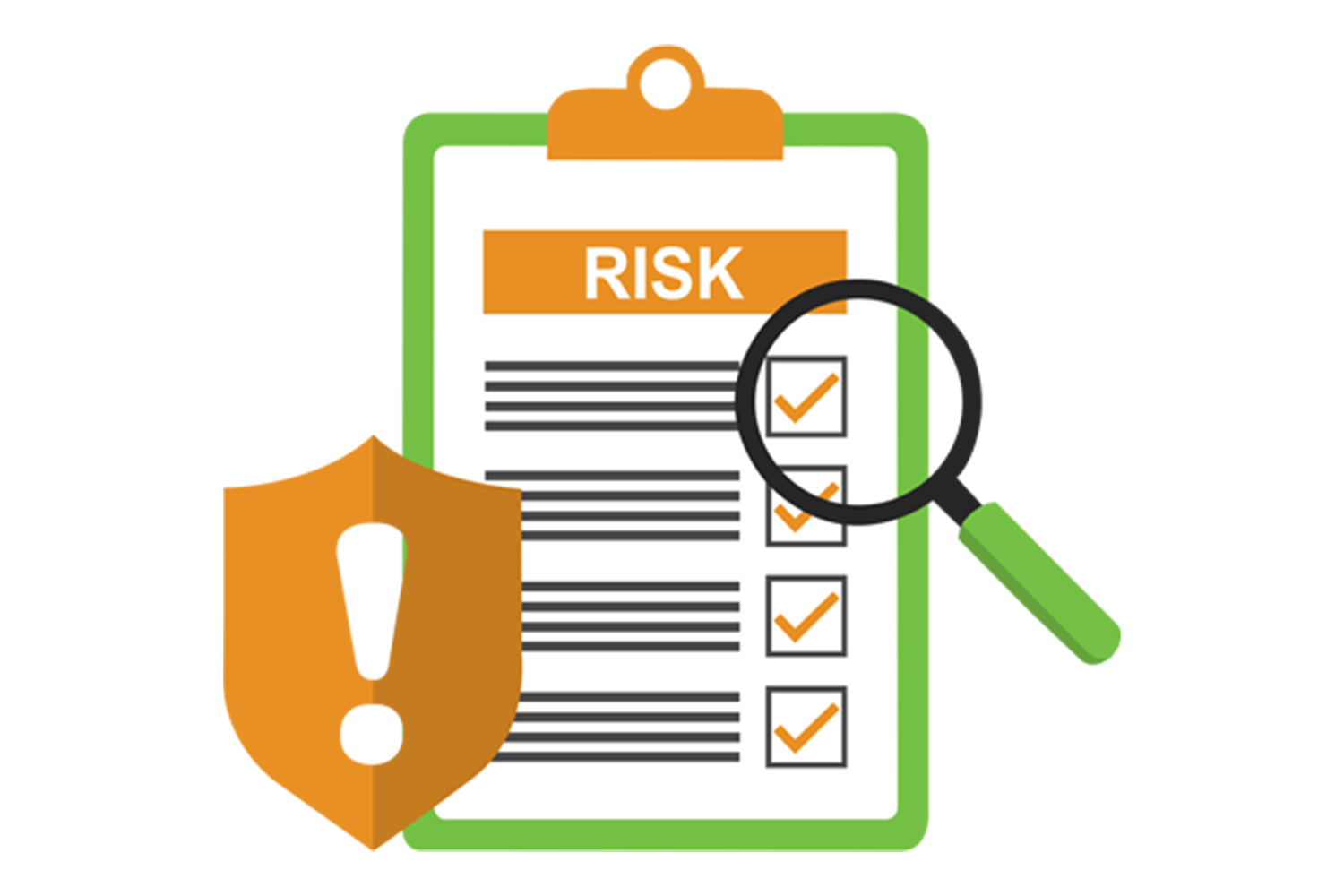
When crew sizes grow, the gaps grow too:
Seasonal intake can double your crew in weeks
Weather driven surges leave no time to update processes
Manual checking breaks before you realise it has
At peak, AgriSmart handles what manual oversight can’t:
Piece rate checks run for every worker, every shift
Extended hours and overtime captured automatically
Multiple sites and large crews managed in one view
Large intake periods don’t create compliance blind spots
Award control scales with your workforce, not against it
Built for Audit Confidence
AgriSmart keeps clear records of how piece rates and Award conditions are applied across your workforce.
Time and activity logs
Overtime detection records
Piece rate hourly checks
Public holiday recogntion logs
Supervisor approval records
Audit reports
If you’re ever reviewed, you can show exactly how each worker’s pay was worked out. AgriSmart gives you control over Award compliance, with records that stand up to scrutiny.

Control Piece Rate Compliance
Before Payroll Runs
Most underpayment exposure in horticulture isn’t discovered in payroll, it’s discovered by the FWO. AgriSmart checks every worker’s piece rate earnings against the Horticulture Award minimum as time is recorded, so shortfalls, overtime, and public holiday gaps are visible and correctable before a single dollar is processed.
Frequently Asked Questions
What does the Horticulture Award require for piece rates?
The Award requires the piece rate to be set so that a worker performing at the average productivity of a competent pieceworker, meaning someone with at least 76 hours of experience at the task, earns at least 15% more per hour than the minimum hourly rate for their classification. For casual workers, that minimum hourly rate already includes the 25% casual loading, so the 15% is calculated on top of the loaded rate. This is a rule about how the rate is set, not a guarantee applied to each individual worker on each shift.
What is the daily minimum wage guarantee?
Separately from how the piece rate is set, a daily minimum applies. Each day a pieceworker works, they must be paid no less than their Award hourly rate multiplied by the hours worked that day, regardless of output. This reconciliation is done per day and cannot be offset across days, so a strong day cannot compensate for a day that fell short. AgriSmart reconciles each day against this guarantee and flags any shortfall.
Why do output and hours need to be recorded together?
The daily reconciliation only works if both output and hours are captured on the same entry, at the point of work, rather than reconstructed later from separate systems. Piece rate data without hours is just a production record. Combined with hours it becomes a compliance record, and it is the same information the Fair Work Ombudsman would ask for in a review.
What happens when a day falls short of the minimum?
When a day falls below the minimum wage guarantee, the exact top-up required is calculated and surfaced for approval before the pay run processes. The flag shows the worker, the date, the effective hourly rate, the required rate, and the dollar amount needed. Approving it includes the top-up in that week’s pay, so it never becomes a historical back pay issue.
Why does catching a shortfall before payroll matter?
A shortfall resolved the same week is a single approval. The same shortfall discovered later in an audit becomes a back pay calculation and a potential Fair Work Ombudsman matter. Top-ups are simple when they are current and expensive when they are historical, so acting before payroll runs is what keeps a shortfall from becoming an underpayment.
What records does AgriSmart keep for a Fair Work review?
AgriSmart stores a structured record of how each pieceworker’s pay was worked out, including the piece rate applied per task, the daily reconciliation result, the top-up applied and who approved it, public holiday handling, and any hourly tasks paid outside the piece rate. These are exportable as audit reports, so a review becomes a matter of showing what happened rather than reconstructing it from spreadsheets.
Does piece rate compliance get harder as the season scales?
Yes. Seasonal intake can double a crew within weeks, and manual checking often breaks down before anyone notices. Because the daily reconciliation runs automatically for every worker, large intake periods do not create blind spots, and Award control scales with the workforce rather than against it.
- Payroll
- Timesheets
- Ticketing & Traceability
- Digital Hiring
- Rosters
- Health & Safety
- Task Management
- Spray Diary
- Equipment Register

Timesheets
Staff record time effortlessly with our iOS and Android app, even offline. For added flexibility, hours can be entered manually or through biometric devices in the shed. Every entry flows into payroll and rosters, giving you accurate pay runs, better scheduling, and a clear record of hours worked.
Need More Info?

Ticketing & Traceability
Purpose-built for horticulture, our bin ticketing system brings accuracy and control to your harvest. Track every bin from block to shed with full visibility over quantities, picker performance, and bin movements. Improve harvest efficiency, reduce waste, and strengthen quality control, all while keeping costs in check.
Need More Info?

Rosters
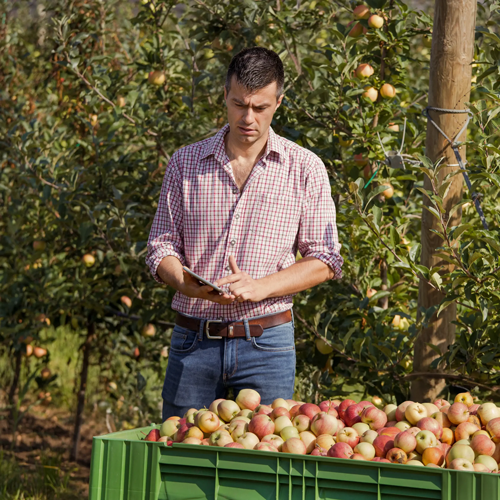
Build and share rosters in minutes with AgriSmart’s scheduling tools. Assign the right people at the right time and keep everyone updated instantly through the mobile app. Staff see shifts as soon as they are published, reducing confusion and last-minute calls. Approved changes flow into timesheets and payroll, keeping your team clear, records accurate, and compliant.
Need More Info?

Spray Diary
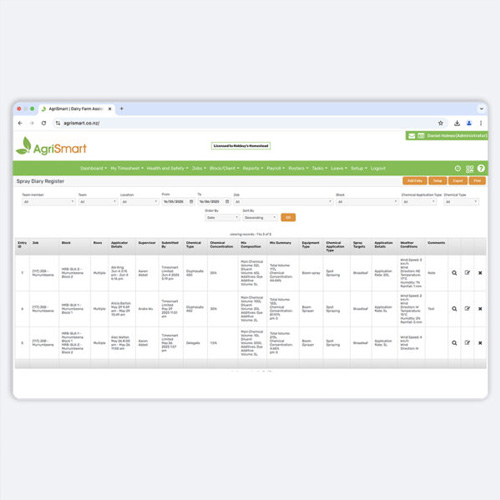
Designed for horticulture, our spray diary makes it easy to log chemical applications, including sprays, fertigation, and dry treatments. Record details once, stay audit ready, and meet compliance standards with less admin. The system keeps records accurate, centralised, and field ready for reliable reporting.
Need More Info?
Equipment Register
Keep tools, vehicles and machinery organised in one digital system. Track photos, details, documents and servicing in structured asset profiles. Set automated maintenance reminders, store full histories and keep equipment compliant, safe and ready to work across every site.
Need More Info?